Monday, June 11, 2012
GENOME: Chromosome 7: Instinct
GENOME 7: Instinct
In this chapter, Ridley talks about how genetic determinism is a lot more probable now. Ridley discusses how vocabulary is not an innate trait in newborns/humans, but grammar may be. He explains that this theory may be true because children, young toddlers, are able to speak correctly with the right usage of grammar. Chromosome 7 contains a gene that is linked to a disorder, a language disorder called Specific Language Impairment. The inheritance rate has almost reached 100%. With studies, SLI is connected to the inability to learn grammar correctly. The gene in chromosome 7 as stated in the book seems to have a cause in the lesion in the brain.

LAST BLOG: REFLECTION
As a whole, I felt that this class was certainly an experience. I had to learn to balance my time with other AP classes with AP Biology. With the first semester, we had a lot of simulations to do online and it was hard to understand at times. Notebooks have always been my favorite because it is really an accumulation of all the work, notes, worksheets, all of the knowledge we gained from the class as a whole. Ms. Malonek made class really fun for us, especially with little games, presentations, etc. Although the class is pure HARD WORK, I feel that this hard work is worth it in the end. I learned about imperfect/perfects, angiosperms, gymnosperms, alternation of generations, DNA, we read the book GENOME. Overall, the knowledge I gained from this class will stay with me for a life time.
Thursday, March 8, 2012
3 Invertebrates
Pick 3 invertebrates Compare them in terms of physical features and systems. Identify at least 3 similarities and 3 differences.
Butterflies
Physical Features:
1. Three pairs of legs
2. Body divided into 3 parts: head, thorax, and abdomen
3. Large eye on both sides of head; large spherical structures, consists of thousands of omatidea
4. Two pairs of wings
5. Dust-like scales
6. Scales give wings special colors.
7. Good sense of taste
8. release pheromones
9. antennae used for balance in flight
10. no teeth or mandibles
11. feeding mechanism: long double barreled tube: proboscis
Systems:
1. Butterflies pass through four stages in life: egg, larva, pupa, and adult.
2. Reproductive, respiratory, circulatory and digestive systems take place in the abdomen
3. Circulatory system is pretty simple. -> heart is attached to long tube that extends from abdomen to head. Blood is pumped through tube and then released into tissues. Blood seeps through tissue and back to abdomen, sucked back into heart, process occurs again.
4. No transportation of oxygen in blood; use valves called spiracles
5. Males look for females to inseminate; females lay eggs (around 100 in lifetime)


Bees
Physical Features:
1. flying insects related to wasps, ants, hornets, etc
2. short, thick bodies covered with hair
3. six legs
4. three body parts: head, thorax, and abdomen
5. Thorax has three segments with a pair of legs on each
6. tiny waist connects to thorax and abdomen
7. fly about 12.5 miles
8. has two compound eyes made of ommatidia and three simple eyes, ocelli
9. wings
10. antennae
11. mandible, glossa, labrum, and two maxillae
12. stinger
13. leg structure: coxa, throchanter, femur, tibia, metatarsus, and tarsus
14. head contains about 950,000 neurons
System:
1. female mates with several males
2. bee has a colony-level immune response that normally helps heal and infection
3. complex super-organism with physical, chemical, and behavorial defenses at different levels
4. robust immune system that is very effective
5. haploidiploid sex-determination system
6. have two reproductive functions
7. all sperm cells produced by a particular bee are genetically identical
8. main function is to fertilize a receptive queen
9. has a tracheal system
10. open circulatory system (no veins)


Earthworm
Sources:
https://www.google.com/search?hl=en&q=respiratory+system+for+bees&bav=on.2,or.r_gc.r_pw.r_qf.,cf.osb&biw=1441&bih=839&um=1&ie=UTF-8&tbm=isch&source=og&sa=N&tab=wi&ei=eR9ZT-ffKoLniAL_x-SiDg#um=1&hl=en&tbm=isch&sa=1&q=+bees&oq=+bees&aq=f&aqi=g10&aql=&gs_sm=4&gs_upl=9253l9253l0l9593l1l1l0l0l0l0l146l146l0.1l1l0&gs_l=img.4..0l10.9253l9253l0l9593l1l1l0l0l0l0l146l146l0j1l1l0&pbx=1&bav=on.2,or.r_gc.r_pw.r_qf.,cf.osb&fp=6d2204f5942beebf&biw=1441&bih=839
http://www.google.com/imgres?um=1&hl=en&sa=N&biw=1339&bih=766&tbm=isch&tbnid=4WlaQO-6j9TaRM:&imgrefurl=http://en.wikipedia.org/wiki/Bee&docid=48r6T8Ylqfx3XM&imgurl=http://upload.wikimedia.org/wikipedia/commons/thumb/a/ac/HoneyBeeAnatomy.png/220px-HoneyBeeAnatomy.png&w=220&h=198&ei=5gxYT46rIu3KiAKNzb2ECw&zoom=1&iact=hc&vpx=208&vpy=123&dur=312&hovh=127&hovw=141&tx=111&ty=75&sig=109484771088206764939&page=1&tbnh=122&tbnw=135&start=0&ndsp=28&ved=1t:429,r:0,s:0
http://science.howstuffworks.com/environmental/life/zoology/insects-arachnids/bee1.htm
http://kids.britannica.com/comptons/article-196545/bee
http://centralamerica.com/cr/butterfly/
http://www.english-online.at/biology/butterflies/butterflies-and-moths.htm
Friday, March 2, 2012
GENOME: Chromosome 6: Intelligence
In this chapter, Ridley discusses the "intelligence gene" and how it doesn't work in a conditioned area. The "gene" needs to work in an environment that stimulates the gene to work. For example, a person's intelligence becomes more expressive as they grow older because they get to choose where they live, what they do, and how they do what they do everyday, they choose their comfort zones therefore promoting these very genes to be more expressive. In class, Ms. Malonek discussed how each person has a different way of gaining intelligence or understanding things. Some people are hands-on learners, visual learners, musical learners, athletic learners, step-by-step learners, etc. If a person who learns best visually is forced to learn kinesthetically, then the person won't learn, it would just go in one ear and out the other.
SOURCES:
http://www.google.com/imgres?um=1&hl=en&sa=N&biw=1317&bih=779&tbm=isch&tbnid=3S-BAEOl2UPHyM:&imgrefurl=http://singularityhub.com/2010/04/22/gene-for-intelligence-revealed-by-studying-williams-syndrome/&docid=YslBKFCcoY7T8M&imgurl=http://singularityhub.com/wp-content/uploads/2010/04/intelligence-gene-williams-syndrome.jpg&w=239&h=177&ei=ebxRT_XZMuvTiAKSxK23Bg&zoom=1&iact=hc&vpx=219&vpy=178&dur=746&hovh=141&hovw=191&tx=86&ty=71&sig=109484771088206764939&page=1&tbnh=138&tbnw=188&start=0&ndsp=24&ved=1t:429,r:0,s:0
SOURCES:
http://www.google.com/imgres?um=1&hl=en&sa=N&biw=1317&bih=779&tbm=isch&tbnid=3S-BAEOl2UPHyM:&imgrefurl=http://singularityhub.com/2010/04/22/gene-for-intelligence-revealed-by-studying-williams-syndrome/&docid=YslBKFCcoY7T8M&imgurl=http://singularityhub.com/wp-content/uploads/2010/04/intelligence-gene-williams-syndrome.jpg&w=239&h=177&ei=ebxRT_XZMuvTiAKSxK23Bg&zoom=1&iact=hc&vpx=219&vpy=178&dur=746&hovh=141&hovw=191&tx=86&ty=71&sig=109484771088206764939&page=1&tbnh=138&tbnw=188&start=0&ndsp=24&ved=1t:429,r:0,s:0
GENOME: Chromosome 5: Environment
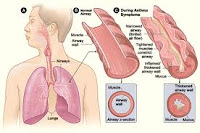
I have had asthma since I was a young girl. I haven't outgrown asthma yet, but I have managed well. Although no one in my family has asthma, my dad has allergies, which correlates with asthma. The inheritance of the gene is based on principles of pleiotropy, pluralism, and the environment of the individual. Ridley asserts that asthma has a direct relationship with allergy. With the increase of pollution and hygiene, asthma has increased. There isn't really a particular asthma gene, but the gene produces immunoglobulin-E. But there is a different gene for each ethnicity and the environment of the individual. This chapter interested me in particular because I have asthma myself. Knowing that the environment and a "particular" gene is the "cause" of my asthma makes me want to dig for more answers. the rate for asthma is increasing because of the heavy pollution and also because now, parents are becoming more "sanitary" so that they could decrease the chances of their child gaining asthma. But the question is, which gene is it?

SOURCES:
https://www.google.com/search?hl=en&q=asthma&bav=on.2,or.r_gc.r_pw.r_qf.,cf.osb&biw=1317&bih=779&um=1&ie=UTF-8&tbm=isch&source=og&sa=N&tab=wi&ei=97pRT9CsCdHJiQKGz9i0Bg#um=1&hl=en&tbm=isch&sa=1&q=asthma+inhaler&pbx=1&oq=asthma+inh&aq=0&aqi=g10&aql=&gs_sm=3&gs_upl=12741l13213l0l13940l4l4l0l0l0l0l121l305l3.1l4l0&gs_l=img.3.0.0l10.12741l13213l0l13940l4l4l0l0l0l0l121l305l3j1l4l0&bav=on.2,or.r_gc.r_pw.r_qf.,cf.osb&fp=eed9cc9c258d80c7&biw=1317&bih=779
GENOME: Chromosome 4: Fate
People have this preconceived notion that genes are defined by the diseases they cause. Ridley believes that it is quite absurd because it's sort of like "defining organs of the body by the diseases they get". Wolf-Hirschhorn syndrome is a very rare and serious syndrome, with such strong genes, victims die at a very young age. A mutated version of the very gene that causes Hirschhorn is associated with Huntington's chorea. The gene repeats CAG over and over again and with this a person's "destiny, sanity, and life" hangs by the thread of that very repetition. I agree with Ridley's notion that genes can't be classified by the diseases that they cause because genes are not created, built, or made to cause a particular disease. With malfunctions and different correlations, certain genes end up causing diseases that may have never existed per say. It all depends really, on fate.

SOURCES:
https://www.google.com/search?hl=en&q=wolf-hirschhorn+syndrome+gene&bav=on.2,or.r_gc.r_pw.r_qf.,cf.osb&biw=1317&bih=779&um=1&ie=UTF-8&tbm=isch&source=og&sa=N&tab=wi&ei=iLRRT9KSBbCOigK0mui0Bg

SOURCES:
https://www.google.com/search?hl=en&q=wolf-hirschhorn+syndrome+gene&bav=on.2,or.r_gc.r_pw.r_qf.,cf.osb&biw=1317&bih=779&um=1&ie=UTF-8&tbm=isch&source=og&sa=N&tab=wi&ei=iLRRT9KSBbCOigK0mui0Bg
GENOME: Chromosome 3: History
Archibald Garrod was a medical saint. He took a risk and proposed a question: what is a gene? He went on to examine "chemical sports" After close examination, Garrod came up with a bold hypothesis of these "inborn errors of metabolism". He thought that a catalyst, must be an enzyme that was made of protein, in afflicted people, the gene produced a defective enzyme. His assumed that genes were there to produce chemical catalysts, one gene per catalyst. He thought that genes were "devices for making proteins". Inborn errors of metabolism, Garrod believed, "were due to the faiulre of a step in the metabolic sequence due to loss or malfunction of an enzyme." Along with the many other histories of the gene, Garrod's was particularly interesting because I felt that he truly was ahead of his time. I believe that these errors of metabolism are indeed because of a malfunction in the enzyme's part. Diseases like alkaptonuria, that aren't very dangerous, could have been solved.
Subscribe to:
Posts (Atom)